


















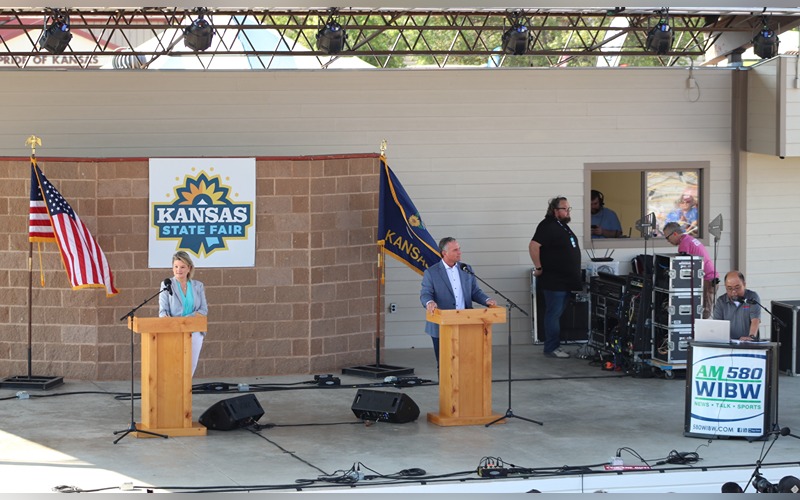
Democratic Senator Cindy Holscher and Republican Senate President Ty Masterson faced off in Hutchinson to tackle property taxes, water rights, data centers, healthcare, and economic growth.
HUTCHINSON, Kan. — The Heartland Credit Union Pavilion at the Kansas State Fair served as the backdrop for a gubernatorial debate between Democratic candidate Senator Cindy Holscher and Republican candidate Senate President Ty Masterson.
Moderated by WIBW’s Greg Akagi alongside a panel of journalists—Michael Schwanke (KWCH TV), Tim Carpenter (Kansas Reflector), and Donna Sullivan (Grass and Grain)—the hour-and-a-half debate covered the state’s most pressing issues before a packed, vocal crowd.
Property Taxes and State Budget Priorities
Property tax relief took center stage as both candidates presented starkly different approaches:
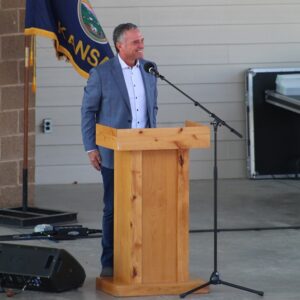
- Ty Masterson’s Plan: Masterson touted his “Homeowner’s Bill of Rights,” aiming to cap runaway property tax increases and protect homeowners from taxes on unrealized property values. He argued that lower taxes and reduced state spending are essential to economic growth.
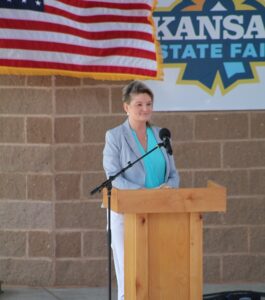
- Cindy Holscher’s Plan: Holscher countered that property tax pressures stem from corporate tax breaks enacted by the legislature and the state’s failure to fully fund special education, which shifts financial burdens onto local communities.
- State Revenue & Cannabis Legalization: To address budget deficits and fund infrastructure and public education, Holscher proposed legalizing cannabis. Masterson rejected tax increases, calling instead for cuts to government waste, fraud, and abuse.
Water Resources & Data Center Infrastructure
With agriculture driving much of the Kansas economy, water conservation and rapid technological development sparked intense debate:
- Ogallala Aquifer & Water Rights: Both candidates emphasized the importance of safeguarding water resources for Western Kansas farmers and rural communities.
- Data Center Guardrails: Addressing data center developments, such as proposed projects in Barber County, Holscher urged strict guardrails to protect local water supplies and utility rates while ensuring union labor for construction. Masterson supported local decision-making and economic growth, asserting that appropriate statutory guardrails were already being established to protect resources without turning away investment.
Agriculture, Fuel Costs, and Dairy Labor
- Diesel & Crop Transportation: In response to rising fuel surcharges on agricultural transport, Masterson attributed high fuel prices to federal refining constraints and advocated for expanded domestic oil, gas, and ethanol production. Holscher pledged to defend Kansas producers against federal policies and trade tariffs that harm agricultural exports.
- Immigrant Labor in Agriculture: Addressing labor shortages in the dairy industry, Masterson emphasized border security and legal worker program expansions. Holscher highlighted the necessity of foreign labor for farm operations and warned against aggressive ICE enforcement actions that disrupt law-abiding workers and processing facilities.
Rural Healthcare & Medicaid Expansion
- Hospital Closures: With nearly 30% of rural Kansas hospitals facing potential closure, Holscher strongly advocated for expanding Medicaid, citing data showing non-expansion state hospitals are six times more likely to close.
- Alternative Solutions: Masterson opposed Medicaid expansion, contending it displaces aid for low-income mothers and children, and called for targeted provider protection plans instead.
Economic Development & Kansas City Chiefs Package
- Stadium Relocation Package: Masterson defended the state package designed to attract the Kansas City Chiefs to Kansas, highlighting thousands of potential jobs, billions in private investment, and significant sales tax generation without raising individual taxes.
- Worker & Community Protections: Holscher expressed personal affection for the Chiefs but maintained that team owners should fund their own stadiums, promising that if elected, she would ensure the economic benefits deliver union jobs, livable wages, and local community investments.
Education Funding & Literacy
- Public Schools vs. Vouchers: Holscher strongly opposed public tax dollars funding private school vouchers, arguing they disproportionately benefit high-income families while defunding public schools attended by 90% of Kansas children.
- Literacy Initiatives: Masterson prioritized addressing the state’s literacy rates by expanding parental choice and adapting successful education models from states like Mississippi.