

















Visitors who travel to Salina’s Garage Automotive Museum this fall will no doubt be impressed with the collection of red vehicles for the museum’s “Red Hot Rides” exhibit, which includes one 1950 Piper Pacer.
Until this month, the aircraft has been a mainstay in Kansas State University Salina’s aviation maintenance hangar. Now, it is proudly displayed with a Powercat flag at the museum, ready to impress the public for months before it returns to campus.
It started with one passionate Wildcat’s idea. Through the process of planning, disassembling, parading and reassembling, many more K-State students got hands-on experience in aircraft maintenance. Now, museum visitors can witness the result of next-gen aviation education and collaboration with the plane’s display in the “Red Hot Rides” exhibit through Jan. 11, 2027.
-
The Piper Pacer is a beautiful aircraft, and just being able to look at it and know how it got from our campus to the museum is very special.
Owen Gleason
For Salina residents and Kansas State University Salina students, the wonder of seeing the wingless plane paraded through historic downtown, and the students’ maintenance experience with the Piper Pacer, are what they will remember for years to come.
Student’s ‘outside of the box’ idea leads to industry museum collaboration
Owen Gleason, sophomore in aviation maintenance management, Salina, has worked part-time for the Garage Automotive Museum as a museum technician since he was a freshman in high school. Naturally, Gleason had long thought about how great it would be to have a K-State Salina aircraft featured by the non-profit museum.
The museum’s “Red Hot Rides” exhibit theme provided the perfect opportunity to bring his idea to life.
“I brought the museum’s executive director the thought of having a K-State Salina aircraft featured in the museum someday, and she loved the idea,” Gleason said. “When she found out that our campus actually has a red aircraft, that really began the whole process.”
Gleason then turned to fellow automotive and aviation enthusiast James Burk, director of aviation safety at K-State Salina, to help make the project a reality and get the aircraft to the museum.
Burk said that he’s “extremely proud” of Gleason.
“To be able to think of a project like this that is outside of the box is an important skill,” Burk said. “We’re not only training our students to be amazing mechanics, but also professionals —as you go into the professional environment, you’re not going to be able to find a solution for a problem that is always easier or fits one size. For Owen to see an opportunity to include his education speaks volumes about him and what he’s learned here at K-State that he is already taking into the industry.”
Students get hands-on aircraft maintenance experience
At many college campuses across the country, students on their first day of classes enjoy what is called “syllabus day,” where the instructor goes over what the students can expect from the class for the semester.
Not for aviation maintenance management students at K-State Salina.
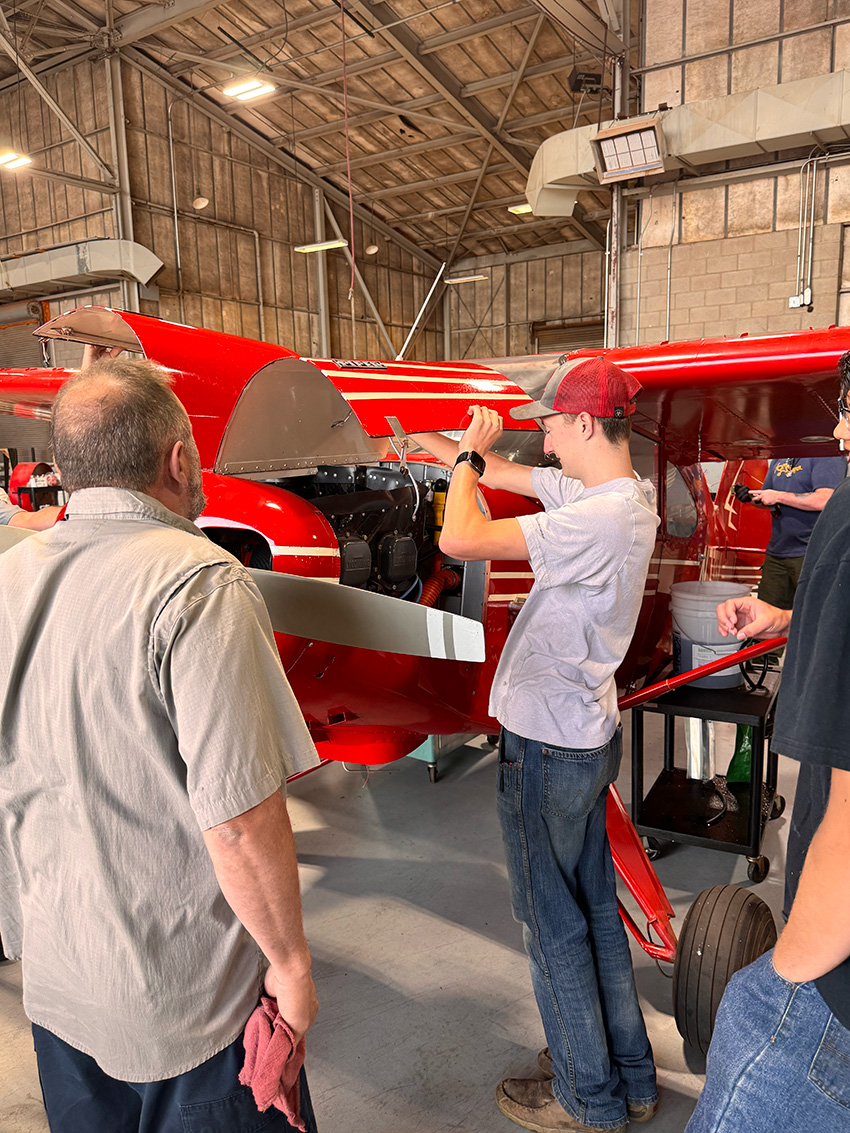
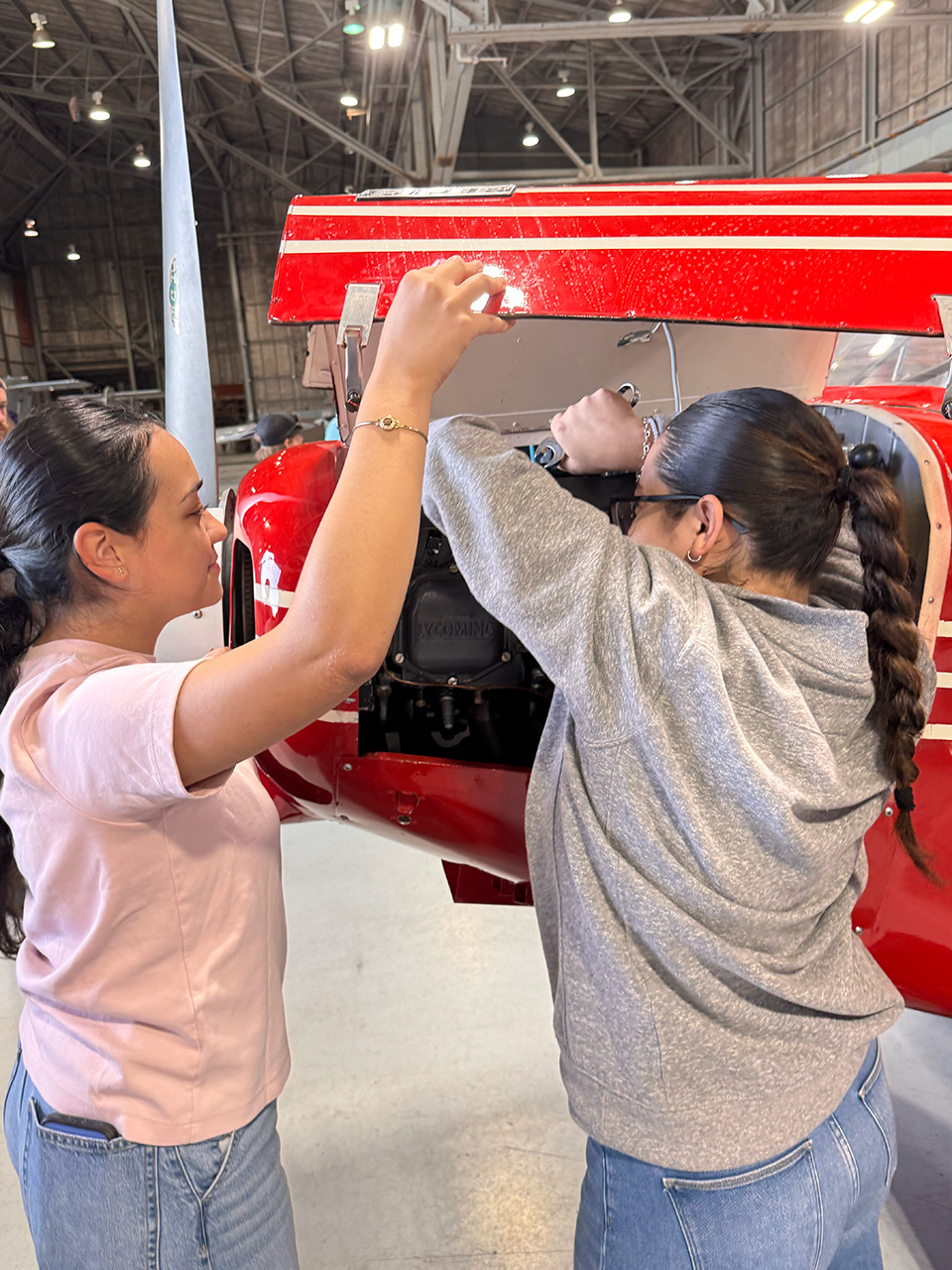 On the first day of classes in the fall 2026 semester, students in the Rotary and Fixed-wing Design and Assembly class — a 300-level course where students learn how to properly inspect an aircraft —delved into hands-on, real-world learning by removing the wings of the 1950s Piper Pacer aircraft.
“It was a pretty cool experience,” Gleason said. “I’ve done other maintenance on those types of planes, but I have never gotten a chance to take off a wing. I am so grateful that our aviation department leaders wanted student involvement on this project.”
Even in a collegiate aviation program, it’s not something that’s done every day.
The aviation industry is growing, and maintenance departments around the world are in need of so many more technicians, so being able to get more students into that side and get more jobs out there is so important.
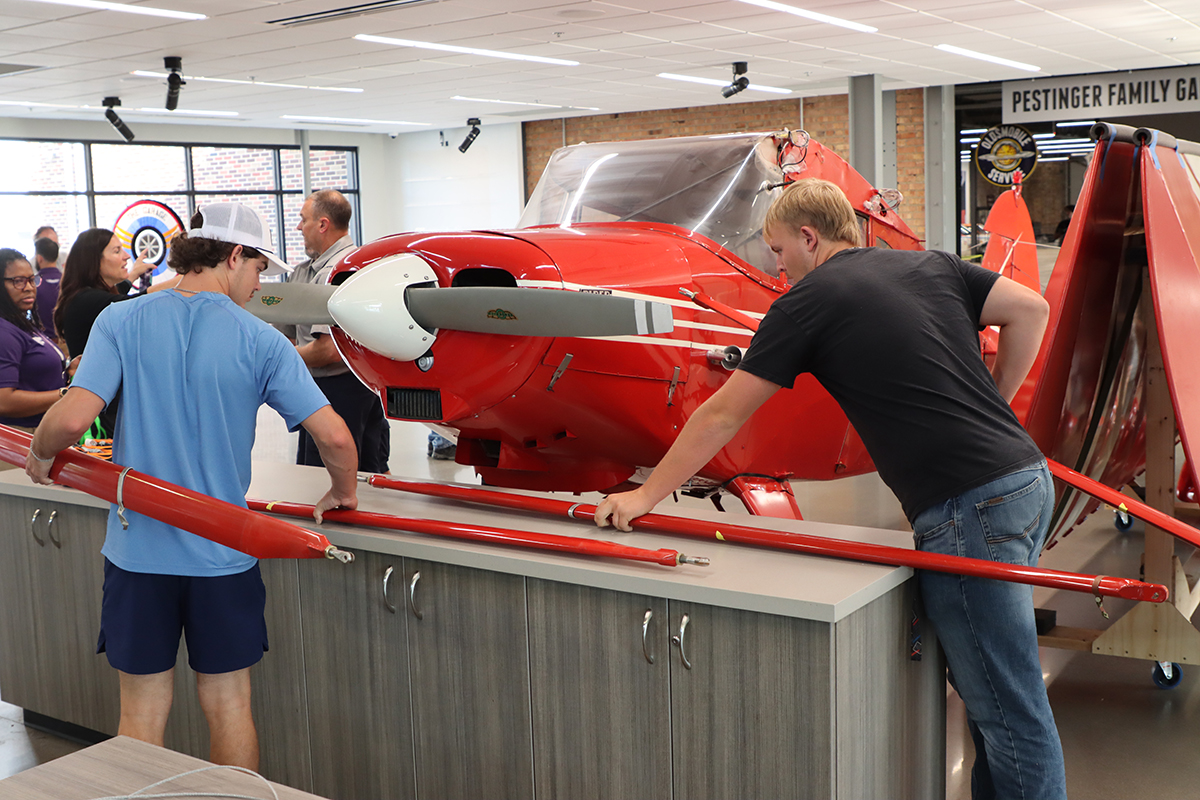
The project allowed the students to apply what they had learned in the classroom and laboratory in previous semesters to an exciting real-world project that also built momentum and motivation for their future careers. They conducted aircraft maintenance and transportation processes, including removing the wings and wheels and then reconstructing them inside the museum, packing the bearings, and working on safety wiring.
K-State Salina specialists mentor students, support practical learning
The students also got to do their work alongside K-State Salina’s professional maintainers. This group of aircraft mechanics keeps the campus’s fleet of training aircraft for the pilot program airworthy daily.
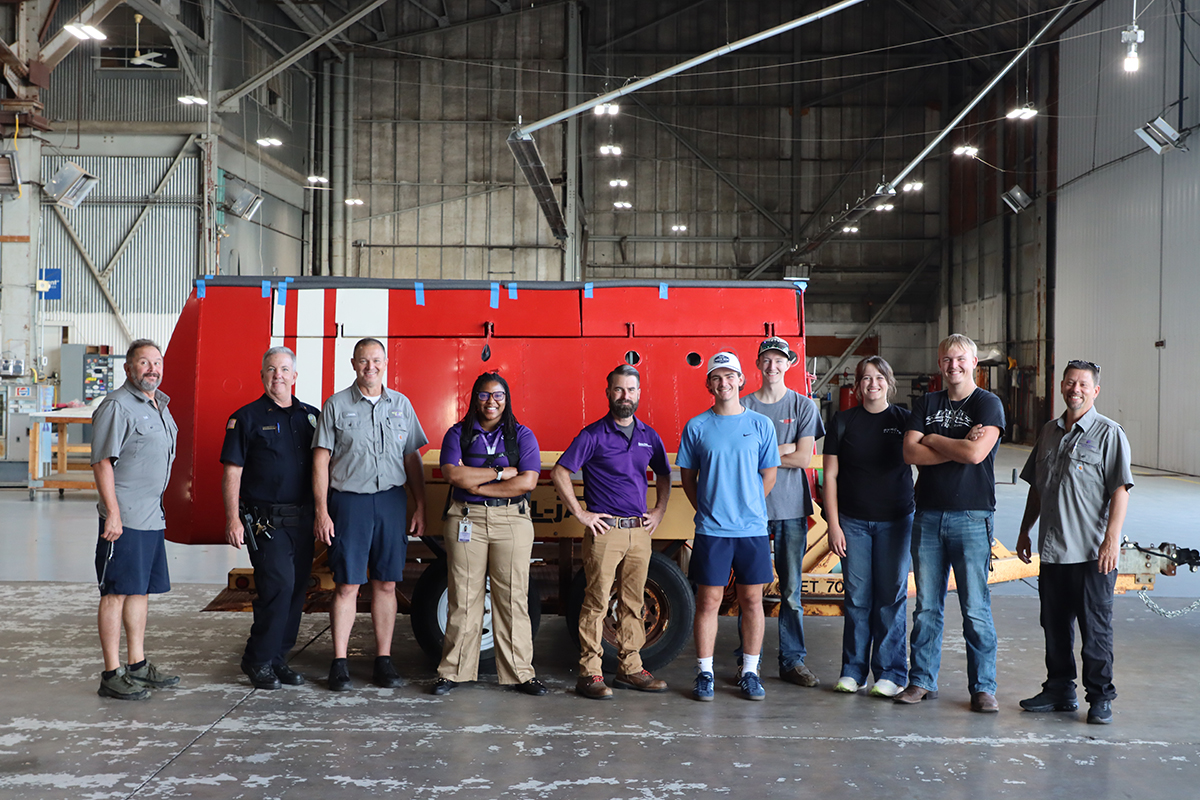
For this project, the maintainers provided mentorship to the students and led them through the processes for removing the aircraft’s wings and preparing it for transport across the city.
Justus Fera, a sophomore in aviation maintenance management, Lee’s Summit, Missouri, said having instruction from different mentors expanded his ability to learn.
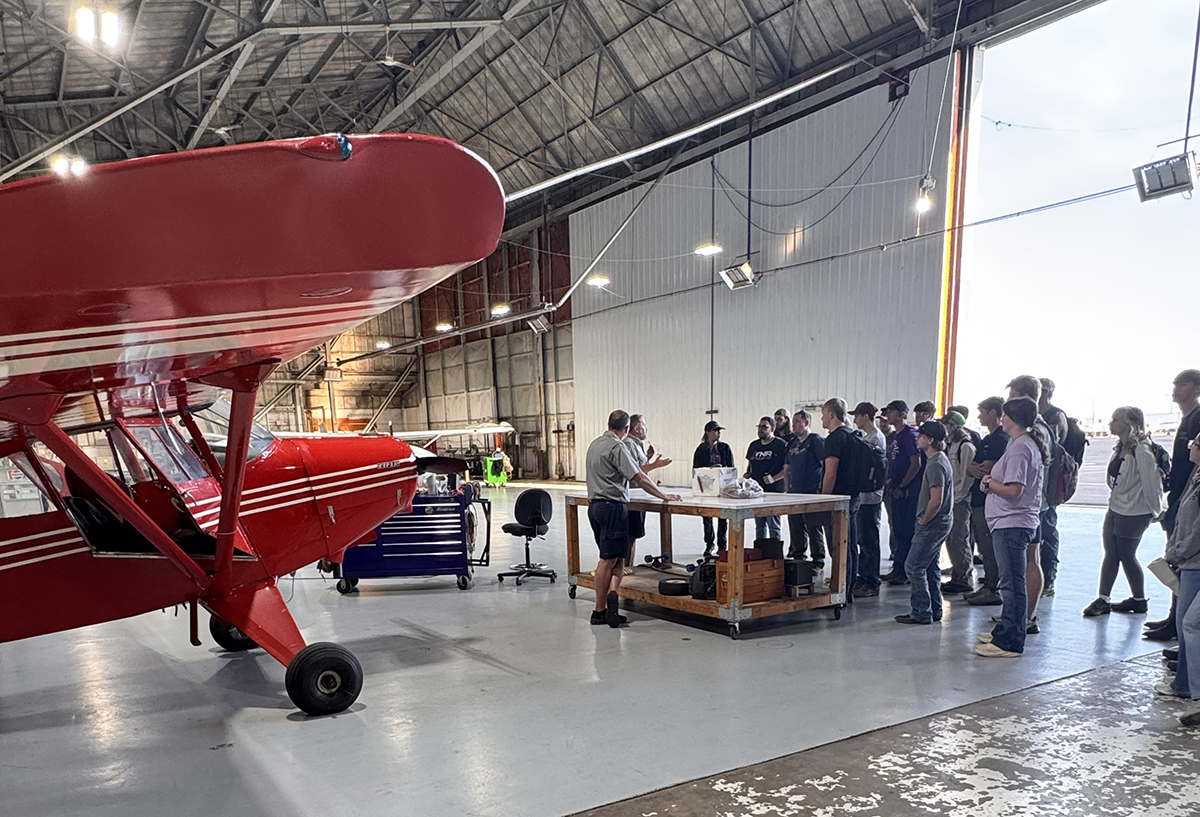
“We were able to start and finish taking the wings apart in one day,” he said. “Listening to the mechanics as they were talking and getting to see how they do it in the field was really beneficial.”
Fera helped with many aspects of preparing the plane for transport, including important processes like draining the fuel, opening inspection panels and disconnecting electrical connectors.
“It was a great first day of class, and I knew it was going to lead to a good year,” Fera said. “My classmates and I were all super excited because we love going to the Garage and volunteering there when we can. We love the Piper. It’s a super cool plane. And we also enjoy doing different things to hone our skills in becoming mechanics.”
‘It’s not every day that you see an airplane transported down the street’
Once the students finished their work, all the approvals were in place and K-State Salina was ready to move its red Piper Pacer, the most difficult part began — getting the aircraft to the museum.
The Garage Automotive Museum is located nearly five miles from the K-State Salina campus. While not a long distance, the transportation process presented challenges that Burk and his team had to take into consideration: analyzing and minimizing the risk of towing an aircraft, ensuring the safety of the staff members transporting the airplane and the general public, as well as navigating the tighter spaces and heavier traffic found in downtown Salina.
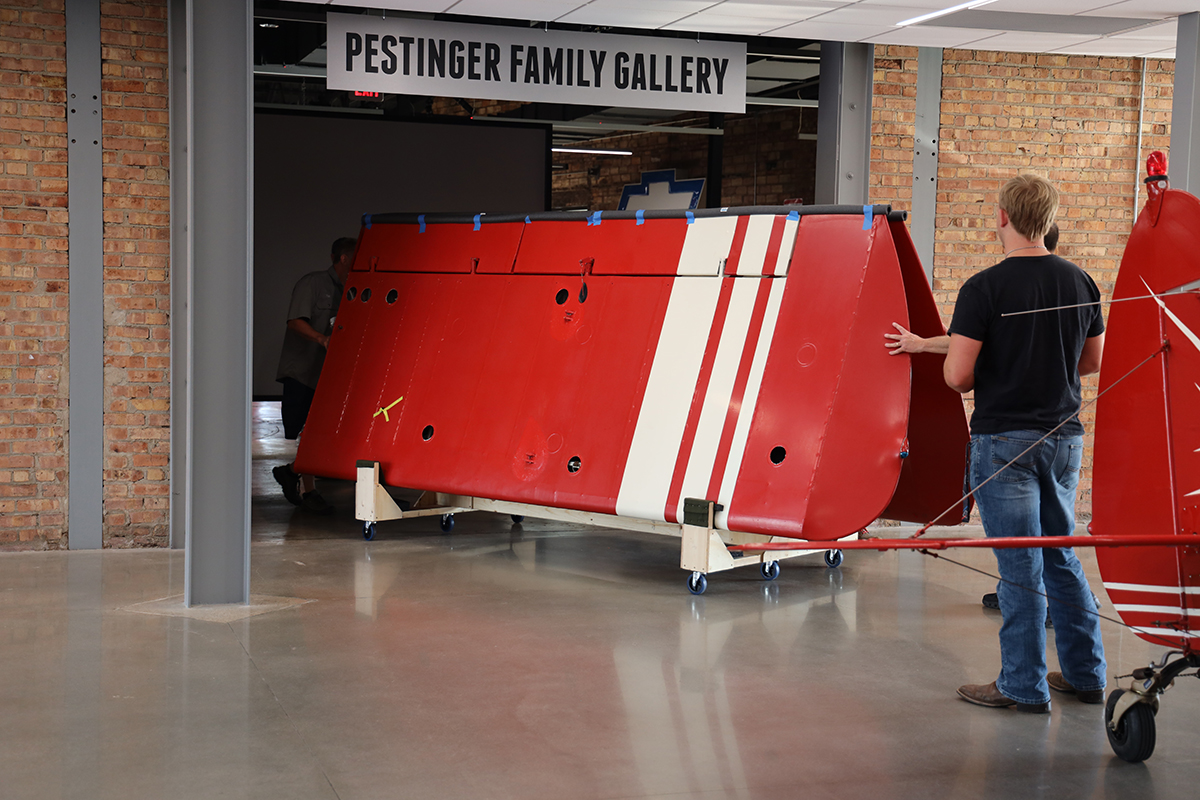
On August 25, the Piper Pacer, which had its wings removed the previous day by the aviation maintenance management students, was ready to be moved into the Garage.
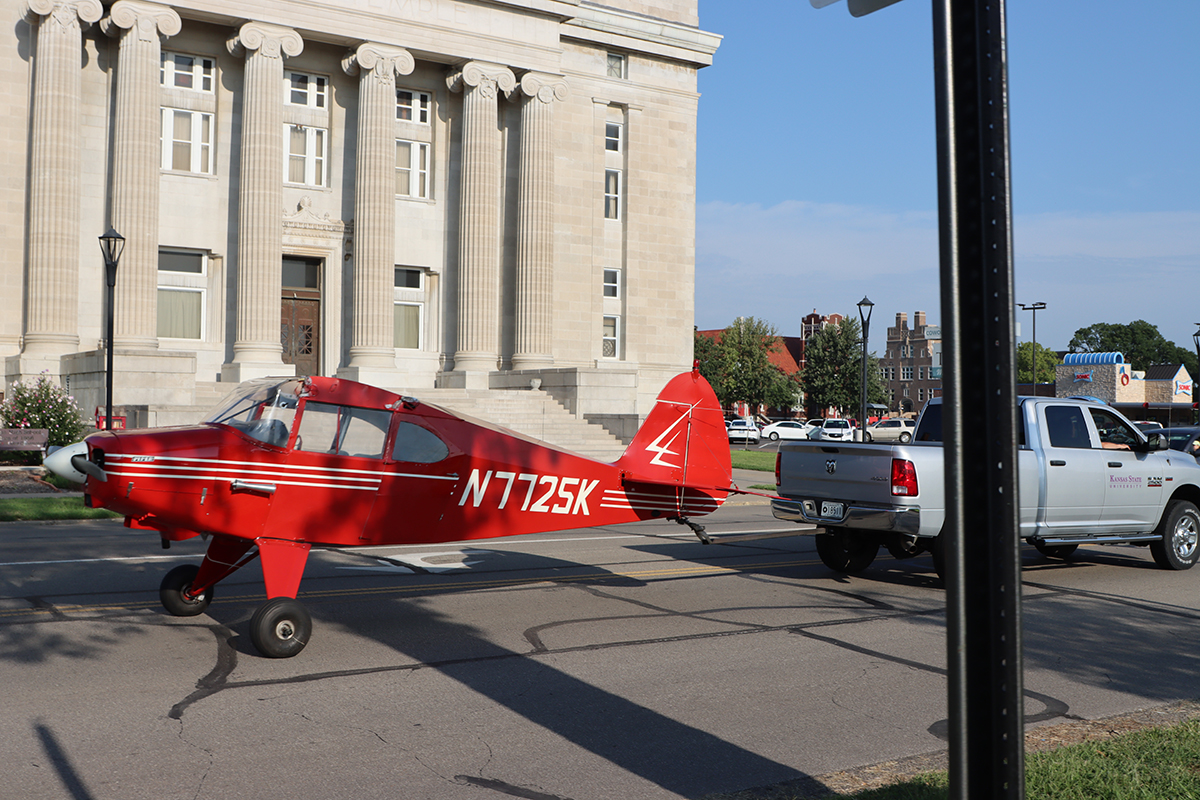
While the professional maintenance team explored transporting the aircraft on a trailer, they ultimately decided that transporting it by its wheels would be the easiest and safest option for the team and the aircraft, given that it could be steered by a pickup truck. The plane was hitched to a truck and driven through the city before being safely delivered to the museum.
“Our professional maintainers have extensive experience in transporting aircraft and disassembling aircraft, and they really bore the brunt of the safe transportation planning,” Burk said. “They made sure that the wings on the trailer weren’t damaged.”
During the transport, Burk led a multiple-vehicle convoy as the aircraft was transported through historic downtown Salina.
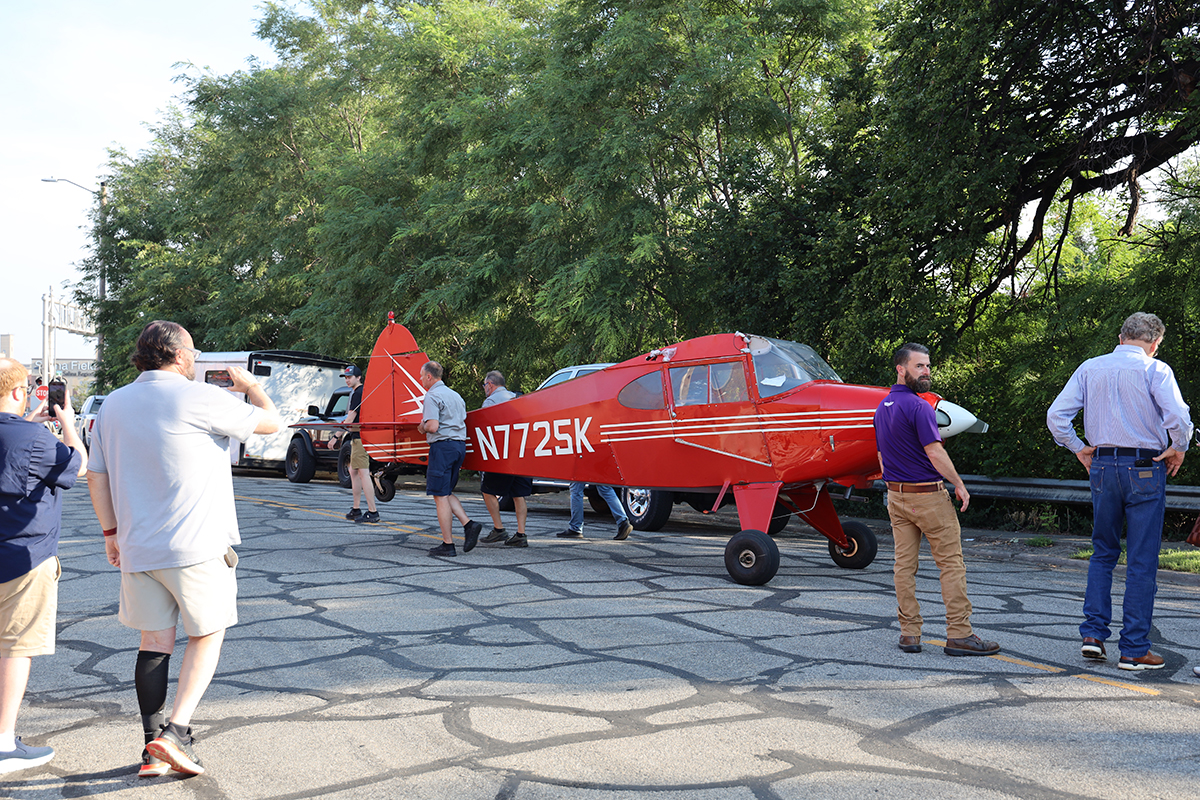
“The first thing people noticed was the K-State truck, and then they saw a red aircraft without the wings on it being towed through town,” Burk said. “You could kind of see them react with surprise and wonder at seeing an airplane. That was really enjoyable to watch everybody’s reaction.”
Gleason was also there on the day that the plane moved across town into the exhibit. He was a part of the student team that helped reassemble the aircraft at the Garage.
“It’s not every day that you see an airplane transported down the street,” Gleason said.
The aircraft that fit the exhibit
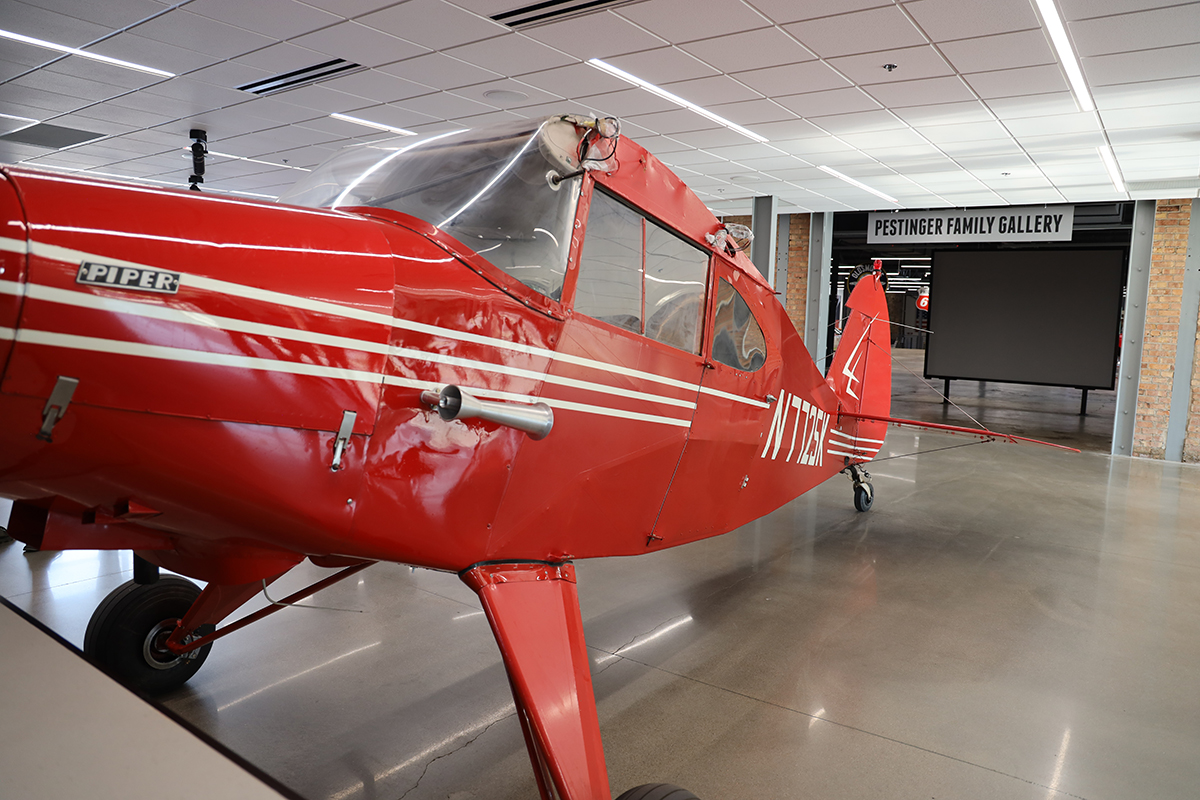
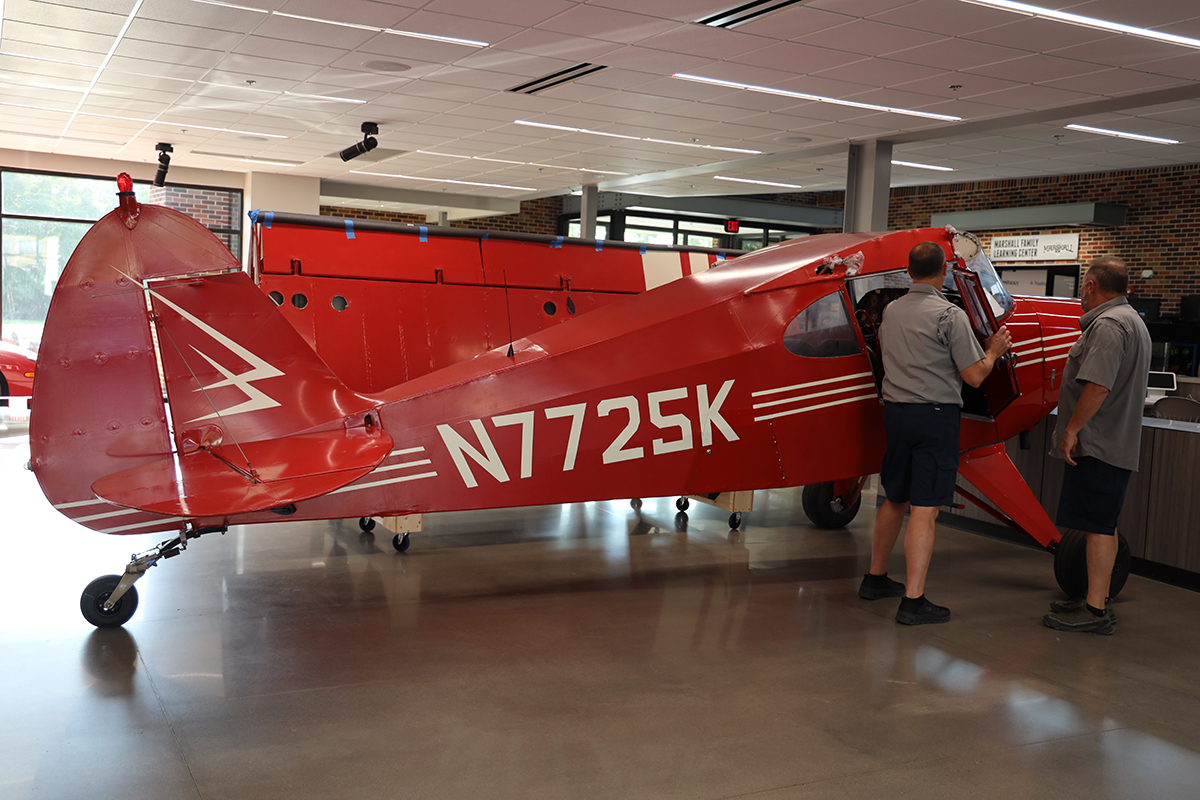
With its bright red finish, classic lines and tailwheel stance, K-State Salina’s Piper Pacer — N7725K — is a fitting addition to “Red Hot Rides.”
Built in 1950, the Piper PA-20 Pacer represents the early years of America’s postwar general aviation boom. The fabric-covered aircraft reflects the practical design of an airplane built 76 years ago. The aircraft was donated to the K-State Salina campus by Darrell and Laura Hills in 2013.
Today, N7725K has a new purpose at K-State Salina: helping prepare the people who keep aircraft flying.
“The Piper Pacer is a beautiful aircraft, and just being able to look at it and know how it got from our campus to the museum is very special,” said Gleason. “The aviation industry is growing, and maintenance departments around the world are in need of so many more technicians, so being able to get more students into that side and get more jobs out there is so important.”
Future aviation professionals will find exceptional opportunities at K-State Salina
K-State Salina’s aviation maintenance management program gives students hands-on experience with actual aircraft and aviation systems — like the students who worked with the Piper Pacer — as they work to earn certificates and associate and bachelor’s degrees. Students in the program are well-prepared for the Federal Aviation Administration’s Airframe and Powerplant, or A&P, certification, a nationally recognized credential for aviation maintenance professionals.
With more than 10 operable aircraft and more than 11,000 square feet of lab space, students in the aviation maintenance management program learn in an environment designed around real-world aviation maintenance, preparing them to lead in an industry in dire need of new mechanics.
Support makes the next generation of aviation professionals possible. Donate to current and future students in K-State Salina’s aviation program at the Kansas State University Foundation website.