

















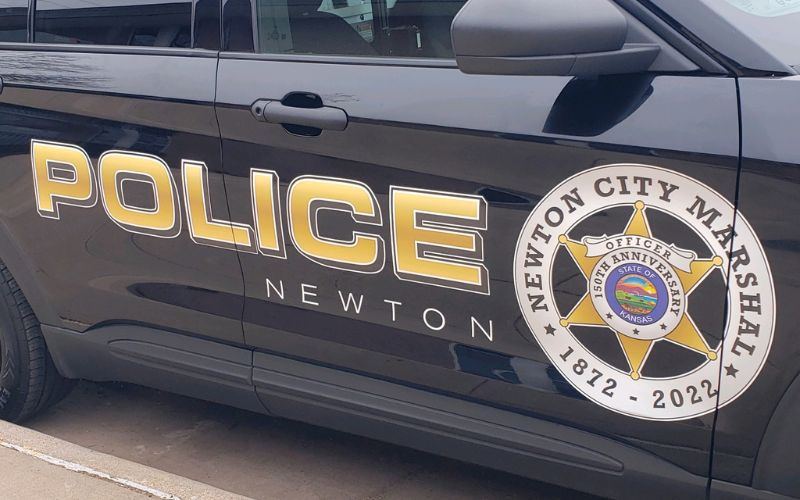
The Newton Police Department is implementing Flock Safety automated license plate reader cameras at 11 entry points to the city, such as highway off ramps, pointed cars entering Newton.
The cameras take an automatic still photo of the back of a car to capture its license plate and identifying characteristics like vehicle color. That information then goes into a Flock database that is searchable by law enforcement. If a wanted vehicle is already in the system, local law enforcement will be alerted when it passes a camera.
They do not use facial recognition or capture any information about the occupants of the car. They don’t make video or audio recordings or take photos of pedestrians. They don’t track a vehicle’s movements once it enters the city, nor are they used for traffic enforcement
The Harvey County Sheriff’s Office has four of these cameras, one of which provided data that led to the capture of three murder suspects from Kansas City, Kansas in June. Law enforcement was alerted when the tag was detected on flock cameras in Chase County before it entered Harvey County.
The city of Hesston also has Flock cameras, as does Hutchinson, McPherson, Salina and Wichita.
Data collected on these cameras are deleted after 30 days unless it is part of an active investigation. When an officer accesses the Flock database, they have to include either a case number or probable cause in a relevant criminal investigation.
In response to concerns about use of Flock Cameras, Newton Police Chief Craig Dunlavy said they’re only capturing a snapshot of a publicly visible license plate, and police searches for that information have to be for a valid law enforcement purpose.
“Unfortunately, there have been cases of the system being abused, and those abuses have been discovered using the checks and balances that are in place,” Dunlavy said. “Those individuals are no longer in law enforcement, which shows that the accountability system works.”
Four of the new Newton cameras have already been installed, with the others to be installed once permitting through the Kansas Department of Transportation has been completed. They won’t be operational until after the Police Department completes training