
















PARSONS, Kan. — Deep Fission has signed a binding energy purchase agreement with the Great Plains Development Authority, marking a significant step toward developing a commercial underground nuclear power project near Parsons.
The agreement, announced Tuesday, October 20, establishes a long-term arrangement for Deep Fission to supply electricity to businesses operating at the Great Plains Industrial Park in Labette County.
The contract builds on a letter of intent signed in December 2025 and commits Deep Fission to pursuing the project and supplying electricity once the facility receives the necessary regulatory approvals and begins operating.
Under the agreement, the Great Plains Development Authority will purchase electricity generated by Deep Fission to meet the needs of industrial park tenants, although there is no minimum purchase requirement.
The project’s initial phase is expected to generate 150 megawatts of electricity, with a target commercial operation date of September 30, 2028. Future expansion could increase total generating capacity to 2,000 megawatts, depending on demand.
“This agreement turns a shared vision into a binding commitment,” said Deep Fission CEO and co-founder Liz Muller.
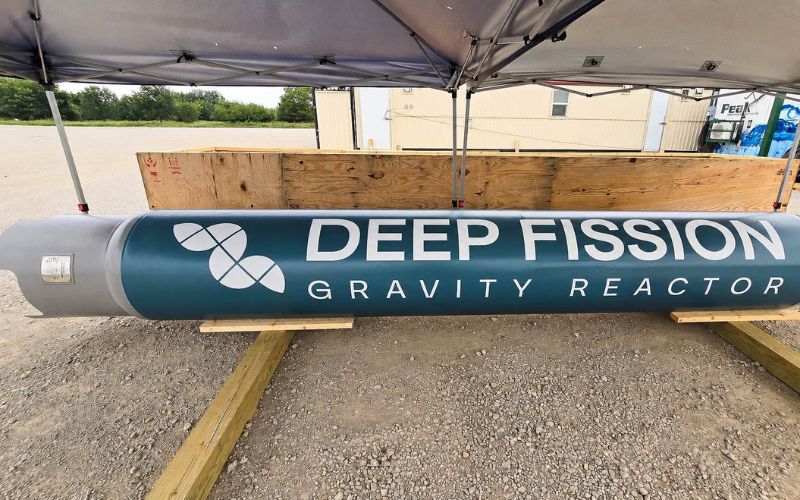
Deep Fission’s Gravity Nuclear Reactor is designed to operate approximately one mile underground, using surrounding rock and water to provide pressure control, cooling and shielding. The company says the approach could reduce construction costs and improve safety compared to conventional nuclear facilities.
The project is located at the 14,000-acre Great Plains Industrial Park, a former U.S. Army ammunition plant. Deep Fission broke ground on its pilot reactor at the site in December 2025 as part of the U.S. Department of Energy’s Reactor Pilot Program.
Great Plains Development Authority Park Director Brad Reams said the agreement could help attract new businesses and investment to southeast Kansas by providing a long-term source of electricity.
The project remains in development and will require additional regulatory approvals, including federal nuclear licensing, before commercial operations can begin.