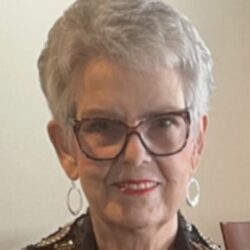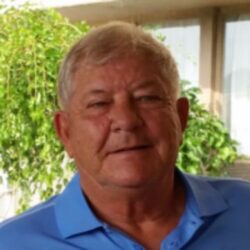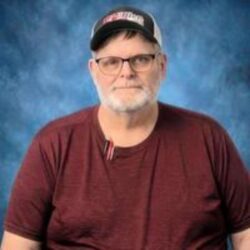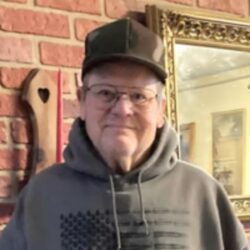





McPHERSON, Kan. — Kansas legislators representing McPherson County covered topics ranging from property taxes to data centers Saturday at a legislative forum sponsored by the McPherson Chamber of Commerce Civic Awareness Committee. Senator Michael Fagg (R-El Dorado) and Representatives Rick Wilborn (R-McPherson), Michael King (R-Hesston) and Paul Waggoner (R-Hutchinson) reviewed various topics during the one-hour forum.
In his opening remarks, Wilborn said each lawmaker generally has certain levels of expertise depending on the committees they serve on. For Wilborn, he is the vice chair of the House Utilities Committee and also serves on the Elections and Utilities committees. Wilborn said the key issues lawmakers are looking at this year and the budget and utilities, the latter to be a key issue within the next 5-10 years and beyond.
Senator Fagg said leadership is seeking to have a “short session” this year, which he’s nervous about because, particularly as related to budget matters, some of this needs to be given more study. Fagg, who chairs the Senate Utilities Committee, said that committee has a lot to consider including expected increase in electric demand in coming years. Fagg said last week major IT and data firms are looking at Kansas, and there could be some announcements on this later this year.
Another subject Fagg has been involved with is legislation that would expand training for 911 personnel to improve the information they can provide during medical emergency calls. Fagg explained this concept would allow local dispatchers to connect callers to a central facility where specialized information can be given while EMS is en route, which is especially important in areas where crews have to travel long distances on a response.
He added what goes on in Topeka is a team effort, maintaining contact with the House members in his Senate district to gain insight into what is being discussed in the other branch of the legislature.
Representative Waggoner also said the camaraderie between legislators is very important in the work they do. Waggoner, whose district includes the city of Inman and Little Valley and Superior townships in McPherson County along with the Buhler and Medora and part of Hutchinson in Reno County, said it has been a very interesting 2026 session, starting with the December announcement that the Kansas City Chiefs would be constructing a new stadium in Wyandotte County.
While not belaboring the issue, Waggoner said he felt this was a bad idea. He cited data stating Kansas was investing more money into a stadium project than any other state, and it does not make sense as an economic development project for Kansas as a whole.
Waggoner also addressed the move by legislative leadership to re-draw congressional district boundaries, which a handful of Republican legislators were not willing to go along with calling for a special session. That in turn led to some of them losing committee chairmanships and vice chairmanships, which he said was their prerogative.
Waggoner serves on the House Federal and State Affairs Committee, which sees many of the “hot button” issues lawmakers face including issues related to abortion, guns, and marijuana among others. He said it has up to now been a relatively quiet session for that committee, however they have looked at immigration issues,and changes in a 287G insurance program which impacts local law enforcement agencies.
Waggoner also is a member of the Higher Education Budget Committee, and he noted Kansas does very little for independent colleges compared to other states, but it has concentrated on Kansas community and technical colleges, which is reflected in the committee’s budget priorities.
Waggoner is also on the House Elections Committee, which he is vice chair of, and they have focused on the issue of non-citizens voting. While he acknowledged this is rare in Kansas, there is a constitutional amendment coming before voters in November specifying that only US citizens can vote. He explained that while the constitution guarantees citizens the right to vote, it doesn’t specify non-citizens do not, and this would clarify that.
He pointed out that some state agencies have sworn statements from people saying they are not citizens, and the committee is desirous to make it easier to compare that data to voter rolls to make sure those persons are not registered to vote. He said some of this problem stems from automatically sending out voter registration forms to people seeking drivers licenses or benefits, and some thinking that since the government sent out a form, they need to fill it out.
King, whose district includes Canton, Moundridge, and five townships in southeast McPherson County along with western and northern Harvey County and part of Marion County including Hillsboro and Goessel, talked about what a week looks like for him. An important part of that is listening to people talk, including constituents, who give him a greater understanding of issues. King is a member of the House Commerce Committee, and one thing they are dealing with is something that you might not associate with it. Working with fire chiefs on the issue of sprinkler systems in two, three and four family residences.
Another committee he is on is the Social Services Budget Committee, which oversees $7 billion of the state’s overall $25 billion dollars in spending, impacting some 400,000 Kansans. King said these people need this support, and the committee is looking at best practices to make that happen. An example of this involves services for children birth to age 5, which had been overseen by five different agencies into one existing agency that could give more focus on this.
King also sits on the Financial Services and Pensions Committee. The major focus of that committee is on cryptocurrency and cybersecurity, especially as it relates to senior citizens who might not be fully aware of what this involves, which makes them ripe for scammers. He cited the example of a Wichita woman who took $350,000 in cash out of her bank and purchased crypto through a machine. Only around $100,000 of that was recovered.
There will be a bill on this topic up for floor debate in the House this coming week, which he will be carrying.
He also talked about a group of lawmakers who meet once a week for what’s called Early 30, during which they do an in-depth discussion of one topic. A recent meeting dealt with the Federalist Papers, during which they learned about the intent of the founding fathers of the nation. He had a couple of people who shadowed him for two days, attending all of his committee meetings and also private meetings.
King said one of the bills they will be working on this week deals with anesthesiologist assistants, and should this be allowed in Kansas or continue following the current CRNA model, with the idea of getting more people involved in health care long term. Other topics upcoming, in addition to budget and taxes, will include a look at the Rural Housing Inventive District program and ways to support housing in smaller communities around Kansas. There will also be discussing the Kansas City Chiefs incentives.
The last half of the forum was dedicated to questions from the audience. The first of these dealt with an eviction expungement bill, which would allow these to be removed from records after a given time that will make it easier or in many cases possible for people to get housing or jobs. This bill passed the House 107-9 and is now before a Senate committee.
Another person asked more about non-citizens voting. Waggoner cited the recent case where the mayor of Coldwater had been registered to vote for some 25 years despite not being a citizen. He said a cross-reference check between various agency lists and voter registration turned up around 200 cases where non-citizens were registered to vote. This also impacts jury duty, which he pointed out being a non-citizen will always get you out of it.
McPherson County Administrator Rick Witte brought up a question about data centers including how they are treated for tax purposes in wake of current state law exempting machinery from property taxes. King said this decision is one that can be made locally.
Another question related to data centers related to their very high electric power consumption. Fagg said an attitude he’s seen is that while they may be welcome in some places, they will “need to pay their share.” Their goal is to make sure existing Kansas electric users don’t see rate increases as a result. He noted a lot of people who are behind data projects have very deer projects.
He added in places where data centers have been welcomed, it has resulted in lower property tax bills, citing an example of what a person in another state told him when comparing taxes in his county which has them versus an adjoining county that did not. Wilborn noted some data center projects have opted to construct their own electric generating facilities.
The topic of property taxes in general came up, and King mentioned the state has about $2 billion in a budget stabilization fund derived from savings the state saw on ARPA money it received. That fund had the potential to grow, and if it were allowed to grow long term to about $6 billion, the interest income off it could allow for elimination of property taxes. Potentially it could also be used short term to provide some property tax relief.
There are two property tax relief bills pending in the Legislature. Wilborn outlined the House version, which puts a three percent cap on residential valuation increases. He said there are some exceptions provided for, and it’s likely the two concepts will have to be reconciled in a conference committee.
Fagg, who was one of ten senators to vote against that body’s version of this legislation, said when you start messing with that type of thing you’re asking for trouble. Fagg said somebody has to pay for this, and he’s concerned that this would place more of a tax burden onto other classes of property. Waggoner noted Kansas’ two largest agricultural organizations have come out against this proposal.
Fagg said he would be more supportive of the House version, but noted regardless there may be a constitutional issue on this concept. The Senate version does involve a constitutional amendment that could be on the ballot in November.
He also noted the inflationary factors that have impacted nearly everything over recent years, and said this can be best dealt with on a local level. He also said housing is also a big issue, and he noted current inflationary cycles may turn around in the future.
Wilborn noted that in the 12 years he has served in the legislature, he has heard more reaction on property taxes than any other topic. He added while McPherson County tax collections, according to a recent report, have gone up 19 percent in recent years, some counties have seen a more than 50 percent increase.
One citizen also thanked lawmakers for their work on bills that would impose a ban on cell phones in schools during class time. This person noted that while she generally favors local control, in this particular case local school boards and individual teachers struggle with how to deal with this locally.