




Kansas Forest Service specialist shares tips for mitigating fire around the home
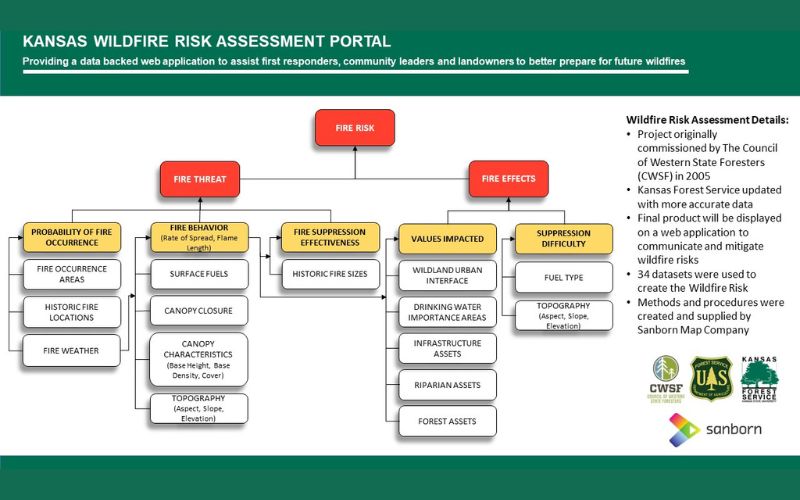
MANHATTAN, Kan. — Kansas may not be known as a state that is at high-risk for wildfires, but Kansas Forest Service specialist Shawna Hartman said Kansas ranks in the top five states nationally for the number of wildfires annually.
“A lot of people in Kansas believe that we will not see wildfires here like we would in California or Colorado,” Hartman said. “However fuels in Kansas are very similar to what we see in southern California.”
According to Hartman, fuel for fires can be vegetation, grass, shrubs, trees or any dry burnable material.
Under dry and windy conditions, Hartman said some fires start from farm machinery. Whether the equipment needs oil or has overheated bearings, there are many ways a fire can ignite in the field.
“There are some things that can be done to mitigate fire risks,” said Hartman, who suggests keeping a fire extinguisher and water nearby in case the fire gets away.
“Don’t delay in calling the fire department to help stop the fire, not only to protect crops, but also because right now fuels (such as dry grass), even though they’re green, are starting to cure.”
Hartman also said some curing of fuels this time of year can cause fires to spread outside of the fields and into the grasslands, bringing fire closer to structures and homes.
“Many times, people who live in a community do not think the wildfire risk applies to them; however, in a community, your neighbor’s home can become fuel to ignite your home,” Hartman said. “We want to protect the outskirts of our communities that could cause fire.”
By reducing the amount of fuel and vegetation around the home, homeowners can help mitigate the risk of fires in their communities.
Hartman described three ignition zones to consider around the home to reduce the fire risk:
- “The first ignition zone is from 0-5 feet. Look around for things that are ignitable if a small ember were to land in that area.” Items like deck furniture, eaves or stored firewood, need to be cleaned or brought in before fire season.
- “Next is the zone from 5-30 feet. That’s where you should look to make sure trees are trimmed so they aren’t too close to the house, and make sure the lawn is watered and mowed.
- “The last zone is 30-100 feet. This is where we look at neighbors’ homes to make sure they won’t ignite others.” Hartman also suggests taking care of dead trees that could fall, or catch on fire.
Intentional burning is another tool that can be used to get rid of some fuels, but Hartman reminds landowners that prescribed burning is one of the main causes for wildfires in Kansas.
“It’s one of those tools that, if not used safely, can cause damage and destruction,” Hartman said. “It’s important to make sure to use prescribed burning responsibly.”
Hartman said the devastating effects of wildfires can be reduced by being aware of what can spark a wildfire, and knowing what to do around the home to reduce the risk of fire impacting it.
For more information, visit www.kansasforests.org.