

















Key economic engines, local manufacturers tackling challenges
GREAT BEND, KS — Great Bend sits at the crossroads of America, making it the ideal location for the many manufacturing firms who call the region home. But, as the nation observes National Manufacturing Month in October, these companies acknowledge that being in the heartland doesn’t make them immune to myriad economic pressures impacting businesses across the country.
However, as they navigate this challenging landscape, they are welcomed and supported by their local communities, said Megan Barfield, Great Bend Chamber of Commerce president and chief executive officer. As the chamber launches into its Elevate GBK five-year strategic plan, she sees this as a chance to focus on key components such as workforce development and business advocacy.
“Because of their impact, we want to take this time during Manufacturing Month to recognize them,” she said. “Not only are they an economic engine, they also show up and are engaged in community events, supporting activities that benefit all of us.”
Even so, “our manufacturing partners often fly under the radar,” Barfield said. But, these businesses are not only integral parts of the local economy, but are part of the global economy as well.
“Although they may have a small area retail presence, these businesses serve nationally and internationally,” she said .The chamber counts area manufacturers among its membership including: Fuller Industries Inc, Great Bend Industries, KMW Ltd., T&C Mfg. & Operating, Inc. and USA Gymnastics & Supply Inc., all of Great Bend; and Roto Mix and Superior Essex., both of Hoisington.
Established in 2012 by the Fabricators and Manufacturers Association to combat workforce shortages and modernize perception of the industry, National Manufacturing Month – celebrated every October-grew from a single event into a nationwide movement after former President Barack Obama issued a presidential proclamation in 2014 and the Manufacturing Institute assumed primary leadership in 2016.
Today, the initiative connects students and educators to modern production and robotics through local plant tours while government agencies and trade partners highlight American innovation and support domestic manufacturers in expanding into international markets.
As a kickoff, National Manufacturing Day (MFG Day) is celebrated annually on the first Friday in October, falling on Oct. 2, this year.
A local prospective
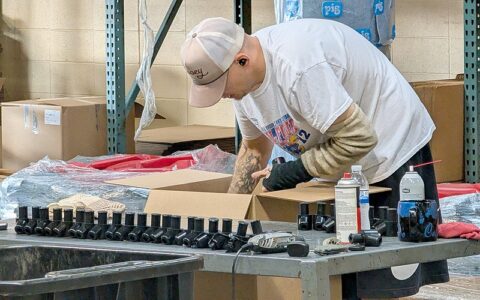
Founded on April 1, 1996, by Craig Pangburn and Thomas H. McGlinn, T&C Manufacturing & Operating Inc. specializes in custom rubber molded parts for the oilfield, irrigation and agricultural sectors, as well as specialized industrial rubber gaskets, O-rings, seals and other parts that fit items from toys to AI data centers to military drones.
The company operates out of a manufacturing facility at 457 E. Highway 56 in Great Bend, Kansas, where it currently employs seven people. Pangburn said the business originated as a spinoff of Rice Engineering Corp., where he and McGlinn were previously employed.
“We remain in Barton County because of the central location of our manufacturing plant along with the easy access roads leading to and out of our facility for quick delivery and quality service,” Pangburn said.
Pangburn said the company takes pride in supporting the local area through sponsorships for youth programs, sports and community events throughout Barton County.
Operating in the current economic environment presents obstacles across local, state and national levels. Locally, Pangburn noted that finding quality labor, securing quality housing and navigating tax incentives remain ongoing hurdles. On a state level, the business faces challenges surrounding cybersecurity, safety compliance and environmental regulations.
Nationally, supply chain disruptions, high fuel costs, health insurance expenses and an unstable economy tied to fluctuating gas prices and taxes heavily affect operations.
“The supply chains with fuel costs are our biggest challenge which affects our overall profitability,” Pangburn said. “In addition, the increasing health insurance along with environmental regulations play a major impact in our overall profitability.”
To manage these ongoing cost pressures and policy shifts, Pangburn said the company routinely adapts its pricing strategy.
“We continually adjust our part costs to reflect the additional costs associated with the challenges we face each and every day,” Pangburn said.
Customers can reach T&C Manufacturing by phone at 620-793-5483 or online at tcmfg.com.
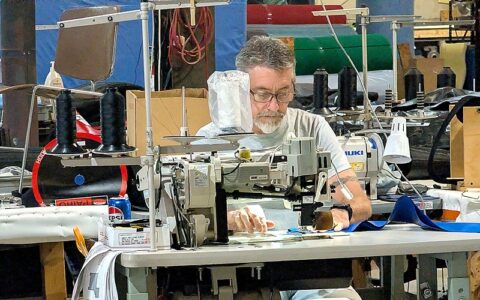
USA Gym Supply Inc., founded in 1981, is seeing manufactures padded surfaces for gymnastics, cheerleading, rock climbing and martial arts, as well as wall padding for gymnasiums.
The business operates at 319 McKinley St. with roughly 20 employees, many of whom have stayed with the company for years.
“I came here after college and worked at Great Bend Industries,” said Mark Ball, founder and president of USA Gym Supply. “There was a small gymnastics program here that we built into a larger one. I started out buying the products we needed, then I began to manufacture them.”
Today, the company distributes almost all of its equipment outside its home state.
“Most of what we make we sell to other parts of the country,” Ball said, noting that northeast and western regions make up a large portion of sales, while Kansas accounts for only 5%. “We love a rural community, and this is a special one.”
The core operation involves cutting and shaping foam before covering it with vinyl or carpet. Because both vinyl and carpet are petroleum-based products, shifts in global oil prices directly affect production costs.
“Foam is affected by the price of oil,” Ball said, adding that elevated fuel costs have also driven up shipping and transportation expenses.
Labor presents another challenge. Although his core team has remained steady, Ball noted that workers, especially experienced sewers, are at a premium.
Supply chain disruptions have been less of an issue, however. Because the firm sources most of its raw materials domestically, increased tariffs have had little impact on operations.
Throughout these business challenges, Ball credits his faith for providing direction.
“The Lord helps in every way,” Ball said. “Trust God and use your resources to help people. There are needs all around us if we’ll pay attention.”
USA Gym Supply can be reached at 620-792-2184 or online at usagymsupply.com.
Manufacturing’s impact
According to the International Trade Administration, the U.S. manufacturing sector contributes $2.9 trillion to the national economy, accounts for 11 percent of U.S. gross domestic product, and employs nearly 12.9 million workers.
Closer to home, manufacturing forms a cornerstone of the Kansas economy, generating more than $27 billion in annual output and accounting for 14.5% of the state’s gross domestic product, according to 2023 data from the Bureau of Economic Analysis. The state hosts more than 4,435 manufacturing firms that employ approximately 173,400 people across various sectors, representing 11.5% of the total Kansas workforce.
Beyond domestic production, manufacturing drives the state’s global commerce. According to 2023 trade statistics from the Office of the U.S. Trade Representative and USA Trade, manufactured goods comprise 86% of the state’s total exports, delivering $12.1 billion worth of products to international markets.
Sector highlights include aviation, food and beverage, machinery, and computer and electronic production, supported by the state’s agricultural resources, robust transportation infrastructure, and skilled labor pool.
Rough seas
But, Sunflower State manufacturers face a range of operational hurdles, led by severe workforce shortages where roughly 90% of companies report difficulty attracting qualified job candidates due to an aging labor force, impending retirements and a lack of skilled technical workers. Rising costs driven by high inflation and elevated interest rates further strain profit margins, cash flow and capital investments. Small and mid-sized producers also struggle to adopt Industry 4.0 technology, such as automation, robotics and artificial intelligence, often lacking internal expertise or fearing expensive integration mistakes.
Furthermore, increased digital connectivity leaves factories increasingly exposed to cybersecurity risks like ransomware, while federal trade policy unpredictability and tariffs raise the cost of imported equipment and create retaliatory pressures on state exports.