


















Boys & Girls Clubs of Hutchinson listening session brings Teens, educators and local leaders together to talk cellphones, mental health, student success and the importance of being heard
HUTCHINSON, Kan. —What happens when you put Teens, educators and local leaders around the same table and ask them to talk honestly about the issues impacting students today?
As it turns out, they agree on a lot more than you might think.
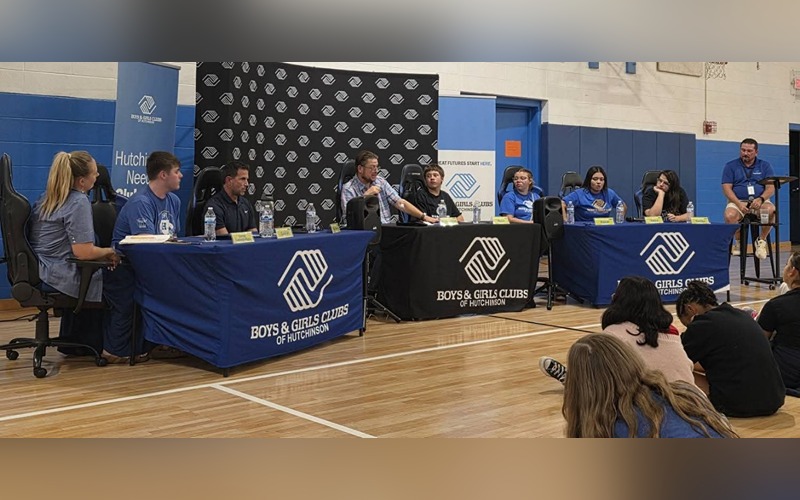
The Boys & Girls Clubs of Hutchinson hosted it’s Teen Town Hall listening session on Wednesday, September 9, at The CLUB at Shadduck Park, bringing together local Teens, educators, USD 308 leadership and community guests for an honest conversation about what it is like to be a student today.
Joining the conversation were Hutchinson Middle School 7 Principal Nate Henry; USD 308 Board of Education member and Club Parent Darcie Canfield-Riggs; and Mr. Malashchuk, an educator at Hutchinson High School.
But the most important voices in the room belonged to the students themselves.
Hutchinson High School freshmen Kaleah B. and Mason B., along with juniors Kawliga R., Karina F.G. and Gabriel M., served as the Teen panelists for the evening.
The group talked about everything from academics and social media to mental health, student-teacher relationships, semesters versus trimesters and, of course, one of the biggest changes to the school day this year– Kansas’ new legislation regarding cellphone use in schools.
The phones are gone — and surprisingly, Teens are okay with it.
One of the biggest takeaways of the evening may also have been one of the most unexpected.
Overall, both the Teens and educators on the panel like the change.
While several students admitted that they were not exactly excited about the cellphone restrictions when they were first introduced, what they have experienced since has changed some minds.
“At first I was upset,” Karina shared. “As the school days have gone on, it has brought a lot of students together.”
She described lunches where students are talking again and meeting up in the quad instead of looking down at their phones, fewer conflicts fueled by social media and more opportunities for students to actually build relationships with one another.
Kawliga said he has seen benefits academically and with mental health. Kaleah described phones as “out of sight, out of mind” and said he has noticed his peers connecting more and even school hallways becoming easier to navigate.
Gabriel was even more straightforward: “I love it.”
He shared that students who once depended on their phones for music have adapted, with CD players and old-school iPods beginning to make appearances at school. More importantly, he has watched students begin talking to one another again.
“At first it was awkward and we didn’t know how to have a real conversation with each other,” Gabriel said. “But now we are starting to come out of our shells.”
The educators in the room are seeing it, too.
Mr. Malashchuk shared that students are getting work done more quickly, paying attention, participating in classroom discussions and spending less time caught up in the side conversations and drama that phones could bring into the classroom.
The policy isn’t without questions. Students brought up very real concerns about being able to contact parents during emergencies or sensitive situations, and educators were able to explain why limiting hundreds of calls and messages during an emergency can actually help keep students safe.
It was exactly the kind of conversation the Boys & Girls Club tries to facilitate by hosting these types of listening sessions: students asking questions, adults listening and both sides having the opportunity to explain their perspective.
If the conversation is about us, include us.
Another message came through loud and clear throughout the evening.
Teens want a seat at the table.
They don’t expect adults to agree with them on everything. They don’t expect to make every decision. But when conversations are happening about their schools, their mental health, their education and their futures, they want the opportunity to be part of them.
Gabriel put it simply early in the conversation: “Youth deserve a seat at the table.”
Later, Kaleah drove the point home: “If it’s a decision about us, please involve us.”
That doesn’t mean Teens believe they have all of the answers. What they asked for throughout the evening was much simpler: a listening and understanding ear.
Karina challenged the adults in the room to “listen to listen” — not listening for a chance to respond, but really hearing what young people are trying to tell us.
Mental health matters — and Teens are ready to talk about it.
Our Teens recognize that openly talking about emotions, anxiety, stress and mental health may still feel new or uncomfortable to some adults. But for this generation, those conversations matter.
Students talked about the emotional, physical and social pressure of school. They talked about social media and the constant comparison it creates. They talked about anxiety, relationships and simply needing an adult who will listen.
As Gabriel pointed out during the discussion, young people today are often more in touch with their emotions than generations before them.
They are doing the heavy lifting of learning how to identify those feelings, put words to them and ask for help. They don’t want those words to fall on deaf ears.
They want the adults in their lives to recognize that talking about mental health isn’t a weakness or an excuse. Sometimes it is a young person doing their best to communicate what is happening beneath the surface.
And if there was one topic where the adults and Teens around the table consistently found common ground, it was this: relationships matter.
Whether the person speaking was a freshman, a junior, a teacher, a principal, a parent or a Board of Education member, meaningful relationships between students and adults continued to come up.
Students want teachers who know them and engage them in discussion. They want administrators who listen. They want adults they trust enough to approach when something isn’t right.
And the adults want those relationships, too.
Educators spoke candidly about the pressure they feel to help students succeed, keep them safe and prepare them for what comes next.
Sometimes students and teachers won’t agree.
Sometimes adults won’t have the answer students want to hear. But the panel agreed that connection and communication have to come first.
That may have been the biggest takeaway from the entire evening.
Teen Town Hall wasn’t about deciding whether the students were right or the adults were right. It was about creating a safe space for all parties to connect and share their views. It was about finding out that sometimes the issues we assume divide generations actually give us an opportunity to better understand one another. And it was about reminding our community that young people don’t have to wait until adulthood for their voices to matter.
At Boys & Girls Clubs of Hutchinson, Character & Leadership means helping young people develop the confidence to speak up, advocate for themselves and others, listen to perspectives different from their own and understand that they have a role to play in their community.
Several programs at the Boys & Girls Club like Journeys, Youth for Unity, Torch Club, Work-Based Learning, Smart Moves and more, are tailored to helping young people find and share their voice.
About Boys & Girls Clubs of Hutchinson
Boys & Girls Clubs of Hutchinson provides safe, welcoming spaces where young people can build meaningful relationships with caring adults, discover new interests and develop the skills they need for a great future. Through intentional programs and everyday Club experiences focused on Academic Success, Health & Well-Being, Life & Workforce Readiness, and Character & Leadership, Club members are encouraged to learn, lead, make healthy choices and prepare for what comes next. More information regarding the Boys & Girls Clubs of Hutchinson can be found at www.bgchutch.com.