





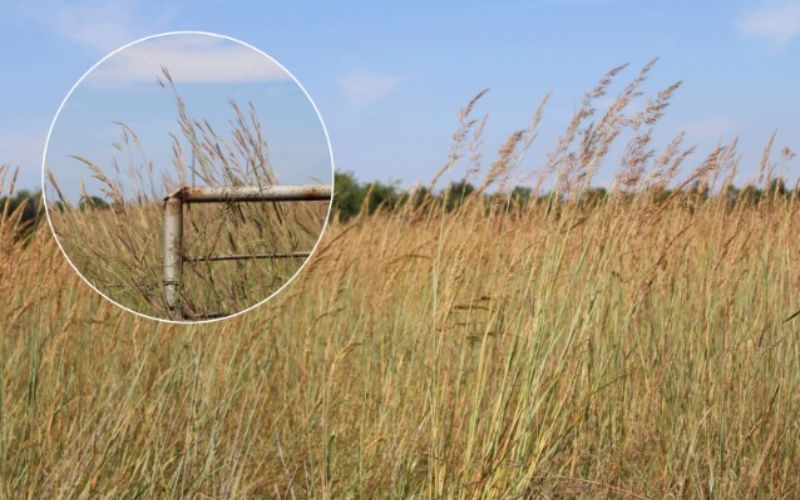
You don’t have to drive far to see the visual effects along the roadways and neighboring native pastures from the moisture we’ve received in the Central Plains over the past three months. Our native grasses are in big time reproduction mode. The grass stems are tall and there are as many seed heads across the prairie, as I’ve ever seen before. One can easily see the distinct turkey foot seed head of the Big Blue and the Indian feather of the Indian Grass. I think it is safe to say the drought is over, but how do we prepare for the next dry period as cattle producers and what are the different things happening in our soil that we can’t see?
Grasslands often show a surprising flush of growth following a drought. For some, a 5-year drought, with many pastures and hay meadows now producing above-average forage yields. This post-drought surge is closely tied to soil biology. During drought, microbial activity slows, causing organic matter to build up. When rains return, microbes rapidly break down this material, releasing a pulse of nitrogen that grasses quickly absorb. While this burst of growth can be valuable for cattle producers, it is temporary and does not translate into long-term productivity. This rapid growth phase is when grass plants are transitioning from the vegetative, to the elongation and reproductive stages. This rapid growth phase typically occurs in May for cool-season grasses and during June and July for warm-season species. Combining our previous drought and summer grazing stress on rangeland pasture year after year, has greatly reduced forage production until this fall, where we see an overabundance of vegetation.
Ranchers should remember that all grass plants emerging from the drought are still recovering. Their root reserves have been depleted, and grass plants need time to rebuild strength and resilience before the next dry spell, which is always a matter of when, not if. Overgrazing during this rebound period risks setting pastures back even further, even if growth appears abundant. Precipitation remains the single most important factor driving forage production on rangeland. Not only the total amount but also the timing of rainfall strongly influences growth. Dry conditions in April and May will reduce cool-season grass production, while shortages from mid-May through July have the greatest effect on warm-season grasses.
According to a study from Nebraska Extension, the 2012 drought illustrated this clearly: in the Nebraska Sandhills, cool-season grasses produced only 40 to 70 percent of normal growth, while warm-season grasses yielded just 30 to 60 percent and went dormant by late June. In years with limited rainfall, carryover forage from the previous season often becomes critical in supporting stocking rates. Conversely, when both the prior year and current season are dry, producers must carefully reevaluate stocking decisions to avoid overuse of their normal summer pastures.
In much of the Great Plains, drought has placed multiple stresses on rangeland plants, including reduced aboveground and root growth, fewer seed heads, less rhizome development, and lower carbohydrate reserves. Recovery speed depends heavily on the condition of the range; healthier, higher-quality pastures bounce back faster than degraded ones. Grazing management decisions during this period play a large role in long-term resiliency. After a long period of feeding supplemental hay, delaying the turnout of cows to the summer pasture is one recommendation that many producers find difficult to follow. Other than cases where a short, early grazing period is used to make use of weedy annuals, like downy brome before it matures and gets less tasteful; delaying turnout will benefit all perennial grasses. This delaying of the initial turnout of the cattle going to grass, allows grasses to develop, regrow leaf area, and restore energy reserves. Meanwhile, allowing the growth of the canopy and undercover to slow the development of unwanted weeds. Reducing stocking rates at this critical period also helps balance forage supply and demand.
Timing of grazing is an important factor in a grazing management plan. A common recommendation is to avoid grazing the same pasture at the same time each year. Previous research has shown that repeated annual grazing during the rapid growth stage will reduce the overall vigor of grasses. Where deferred rotation grazing (4 or more paddocks) is used, livestock producers can ensure that one spot of a pasture will not be overgrazed. Opportunistic grazing of weedy annuals can provide short-term relief, but long-term strategies should focus on maintaining perennial grass health and controlling the unwanted forages. Knowing precipitation is unpredictable, drought planning is essential. Many ranchers rely on “critical dates” tied to precipitation totals to guide management decisions such as adjusting stocking rates, culling herds, or planting annual forages. For Central Plains, April 1 marks the end of the dormant season, May 1 is key for cool-season growth, and June 15 is critical for warm-season grasses. Monitoring moisture by these dates helps producers act early rather than waiting until pastures are overused.
Haying of the native grasses should be complete prior to the middle of July, thus allowing natives to regrow foliage. This allows grasses to convert sunlight into energy for the plant and builds up the reserves before the fall/winter dormancy happens. Storing the extra starch in the roots provides the plants the best opportunity for an advanced start in the following spring. In some cases, planting annual forages such as sorghums, millets, oats, or triticale can provide additional flexibility for forage availability to the livestock producer, if needed. These crops can be grazed or hayed, though haying typically produces more usable tonnage because grazing efficiency is lower. Grazing irrigated annuals, when feasible, can significantly improve forage availability in drought years.
The main takeaway for cattle producers is that while grasslands may show a strong rebound after drought, these effects are temporary and masks the stress plants have endured. Protecting recovering pastures through conservative stocking, deferred grazing, and flexible drought planning are critical to sustaining forage resources. Healthy rangelands recover faster and provide more stable production, ensuring that when the next drought arrives, pastures and herds are better prepared to withstand the challenge.