




November 27, 2025 —The executive salaries at the Iola-based Southeast Kansas Mental Health Center which prompted the organization’s virtual defunding by the six counties in its service region when they were revealed to county commissioners skyrocketed again in 2024 according to tax documents, with its board of trustees boosting the center’s executive director compensation from more than $600,000 to over $889,000 annually.
Nathan Fawson’s salary – which in 2023 was the highest of all Kansas’ 26 state mental health center districts according to those respective tax filings – led significant hikes in all SEK’s executive positions in 2024. Those salary increases came in a fiscal year that saw the organization’s revenues nearly double – primarily due to additional federal Medicaid patient billings and insurance billings from its own expansion into non-mental health services.
According to U.S. income calculators, Fawson’s compensation puts him easily in the celebrated “top 1% of earners” in both the U.S. and certainly in Kansas. Earners above $731,000 annually meet that threshold for the U.S. in 2025; $610,000 in Kansas, according to the financial website SmartAsset.com.
The previous year’s salary revelations aggravated county commissioners in those six counties, who took steps to substantially reduce or zero fund their previous commitments to SEK, saying if the organization could afford those salaries it didn’t need county funds which could be spent on local needs. Medicaid dollars made up some 70 percent of SEK’s billings in 2023.
SEK’s IRS Form 990 tax filing for fiscal 2024 offers a detailed look at the nonprofit’s rapid expansion, growing cash reserves, high executive compensation, and its transformation into a major regional health provider heavily dependent on federal Medicaid dollars. It also confirms an increase in management salary levels which prompted the member counties, which previously kicked in some $90,000 apiece or more on average, to pull their funding for 2026.
SEKMHC reported $66.3 million in revenue for 2024, up from $37.4 million the previous year — a 77% jump. Expenses increased as well but at a slower pace, rising from $38 million to $54.8 million, resulting in an $11.6 million surplus and an operating margin approaching 18 percent.
That financial cushion pushed total assets from $15.6 million to $27 million according to the tax filing, while liabilities fell slightly. Cash on hand jumped from about $4 million to $15.2 million, giving the center roughly three to five months of cash reserves – a level seen as unusually strong for a community mental health nonprofit according to other services’ published reports.
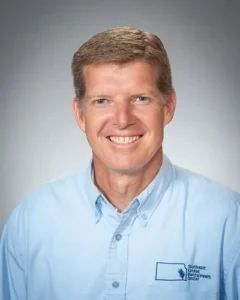 Fawson told The Kansas Informer the reduction in county tax subsidies led initially by Anderson County Commissioners would not affect SEK’s service offerings.
“The recent decision by some county commissions to discontinue their contributions will not change our commitment to serving Anderson County residents, or to the other 5 counties,” Fawson said. “We will carefully manage our resources and strengthen collaboration with community organizations as we continue working toward improving access to quality care.”
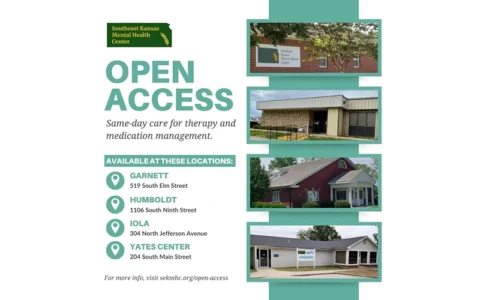
The tax filing shows SEKMHC has evolved far beyond its traditional mental-health-only role. In addition to its core behavioral health programs — which served more than 4,600 mental health clients and nearly 2,000 case-management clients — the center now delivers extensive primary care through its acquisition of Ashley Medical Clinic in Chanute and a Yates Center dental office. The filing reported 11,605 hours of medical services to 39,394 patients. Patient service revenue rose to $61.7 million, representing over 93 percent of total income. Grant revenue made up only a small portion of funding.
Fawson said the organization had no plans to use its surplus dollars to further compete against private healthcare providers in the region other than areas where is presently offering additional services.
Map of Kansas’ 26 mental health center districts
With its growing footprint, SEKMHC is now financially and structurally closer to a regional health system than to a small community provider, and its executive compensation reflects that shift. According to the filing:
- CEO Nathan Fawson earned $889,099, including salary, bonuses, and additional compensation.
- Chief Operating Officer Dr. Doug Wright received $670,522.
- Urologist Dr. John Robinson was paid $663,147.
- Chief Financial Officer Job Springer earned $616,817.
- Several other medical and administrative directors earned between $413,000 and $530,000.
In all, 59 employees earned more than $100,000, and total wages exceeded $32 million.
The center discloses that compensation is set using independent consultants and regional healthcare market data, a practice designed to satisfy IRS requirements for tax-exempt organizations. A family relationship is also noted between board member Walt Regehr Jr. and CFO Job Springer, though SEKMHC says it maintains a formal conflict-of-interest policy and collects disclosure statements annually. Salaries for at least the past two years were approved by the SEKMHC Board of Trustees, several of whom have now been dismissed with county commissioners from the various counties replacing them. Those salaries were adopted upon a recommendation of an Arizona-based business consultant.
Increasing Medicaid funding for Certified Community Behavioral Health Clinics (CCBHCs) under the Biden Administration which tapped funding pathways established by Obamacare was a key strategy for expanding public access to mental health and substance abuse services. Federal legislation like the Bipartisan Safer Communities Act (BSCA) has allocated significant funding for CCBHC expansion, including both grant programs and Medicaid payments. States are also encouraged to participate in the CCBHC Medicaid Demonstration Program, which includes planning grants and demonstration grants to implement the CCBHC model.
Governor Laura Kelly has sought even more Medicaid dollars under Obamacare with a plan to add more people to the state’s Medicaid rolls, but has so far been stopped by the Kansas Legislature from doing so.
Despite its size, SEKMHC conducts very little fundraising — less than 1 percent of its resources according to tax documents. Roughly 75 percent of all spending goes directly to program services, with about 24 percent spent on administrative support such as billing systems, IT, compliance, and facilities.
The center employed 587 people and reported only 12 volunteers, underscoring its status as a labor-driven medical provider.