

















Is Kansas the middle of nowhere? A place with nothing to attract people to come, live, work and play?
Today we’ll meet a man who was born and raised in the western United States. As he transitioned to work remotely in his career, he has found he can do his work from virtually anywhere — and has chosen to live in rural Kansas.
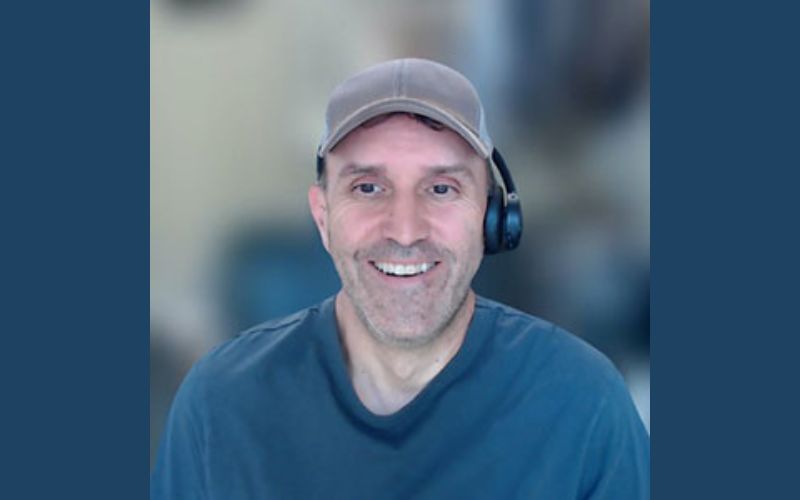
Mike Ball is a software developer working remotely from Kingman, Kansas. He grew up in Oregon, studied economics at Oregon State, and took training on software programming. He worked in Las Vegas and then Arizona.
Ball worked as an independent software development consultant for 11 years. Then one of his clients asked him to come on board full-time with the company. When the Covid pandemic began, everyone in that company transitioned to work remotely.
While in Arizona, he and a friend had come to Kansas to visit his friend’s sister who had moved to Kingman. “I really liked Kingman,” Ball said.
When his company transitioned to remote work, Ball opted to make the move to Kansas.
“My rental costs (in Arizona) were going up 50%,” Ball said. “I was ready to leave the southwestern desert and find a better cost of living in a central location with small town quality of life.”
In fall 2021, Ball moved to Kingman. He continues to work remotely for his company. In his current role, he helps design and operate payment systems for rural water systems across the country, from South Carolina to California.
What advice does Ball have for potential remote workers? “The first step is to establish a level of trust,” Ball said. “It’s a matter of proving value and building comfort with a company or someone in that company. Maybe that means starting in the office onsite, but as life happens, you can transition out.”
“Once they trust you and they know they can count on you to accomplish things while working independently, they’re much more likely to have someone remote. You also need to understand the company workflow so you can make it work.”
Having good broadband is essential. Broadband service is a mixed bag in Kansas. In some cases, broadband is lacking, but in other places independent rural telecom companies have been aggressive on installing fiberoptic cable, for example.
“I have better Internet here than at our home office in Arizona,” Ball said.
Ball foresees continued change in the future. “We’re gonna see a lot of flux. The AI revolution is for real. Maybe AI can enable more companies to do more things.”
He suggests that knowledge workers should look for a business ecosystem with potential, understand where the businesses are in the economic cycle, and constantly work to upgrade their talents. “You want to look at the industry and be on the leading edge,” Ball said.
“There will be some churning and learning. You need to prepare to learn and change and adapt, and expand your skill set. There will be lots of opportunities.”
Having made the move from the southwest, Ball is positive about possibilities for Kansas.
“I think the Midwest is on the rise,” he said. “The coastal boom has passed and there’s a brighter future in the Midwest.”.
His adopted town of Kingman is a rural community of 3,105 people. Now, that’s rural. He’s making a difference by choosing rural Kansas as the site from which to do his remote work.
He points out the contrast with safety and security issues in larger cities. “In Las Vegas, you lock your door when you take your trash out at night,” he said. “Kingman is a more friendly community and more family-amenable. It’s like a modern Mayberry.”
Is Kansas the middle of nowhere? Flyover country to be ignored by people on the coasts?
For Mike Ball, it was the place he chose when he found he could work remotely from anyplace. With good Internet and a central location, maybe – instead — Kansas is the middle of everywhere.
Audio and text files of Kansas Profiles are available at https://www.huckboydinstitute.org/kansas-profiles. For more information about the Huck Boyd Institute, interested persons can visit http://www.huckboydinstitute.org.