


















Soil, resilience and profitability highlight agenda
LAWRENCE, Kan. — Kansas State University and several state partners will host a series of three free workshops to support farm families, from managing their soil and grazing land, and establishing regenerative cropping systems.
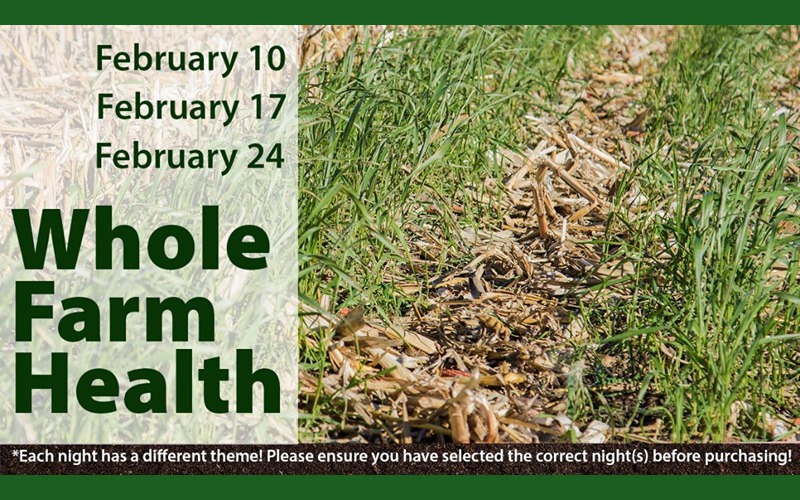
Margit Kaltenekker, an agriculture agent with K-State Extension’s office in Douglas County, said the workshop – Whole Farm Health – will be held on successive Tuesdays at the Douglas County Fairgrounds in Lawrence.
There is no cost to attend, but online registration is requested. The list of workshops includes:
- Feb. 10 – All About Soil Tests.
- Feb. 17 – Optimizing Grass Productivity Through Managed Grazing.
- Feb. 24 – Regenerative Cropping Systems.
Each session will be held from 6-8 p.m. The workshops are co-sponsored by the Douglas County Conversation District; Kansas Alliance for Wetlands and Streams; Kansas River Wraps; and the U.S. Environmental Protection Agency.
K-State’s northeast area agronomist Tina Sullivan headlines the Feb. 10 session with a talk about how to use soil tests to guide fertilizer decisions. The university’s soil testing and fertilizer guidelines were recently updated to help farmers apply fertilizer more efficiently.
Candy Thomas, the Kansas area conservation district soil specialist, will discuss the new frontier of soil tests related to soil microbiology, offering practical field assessments.
Ethan Walker, an area grassland specialist with the Natural Resources and Conservation Service, will talk about how to calculate carrying capacity and using a grazing stick on Feb. 17.
Michael Thompson, president of the Kansas Soil Health Alliance, is featured on Feb. 24 with a message of keeping it simple when managing nutrients in a regenerative cropping system.
“We are aware of the continued ecological constraints and financial pressure facing farmers and farm families across the state,” Kaltenekker said.
“Regenerative agriculture offers an opportunity to begin working with nature to restore, rebuild and revitalize all life in and above the soil – from plants and animals to human health. In turn, regenerative agriculture provides a simple framework that can increase the farmer’s bottom line while increasing nutrient density and mineral nutrition that’s essential for all life.”
More information on the Whole Farm Health series is available at https://bit.ly/farm-health-26, or by contacting Kaltenekker at 785-843-7058 or [email protected].