


















 In anticipation of calving season, K-State’s Department of Animal Sciences and Industry, and K-State Research and Extension faculty and staff are planning a series of calving schools to help boost producers’ chances of a successful year.
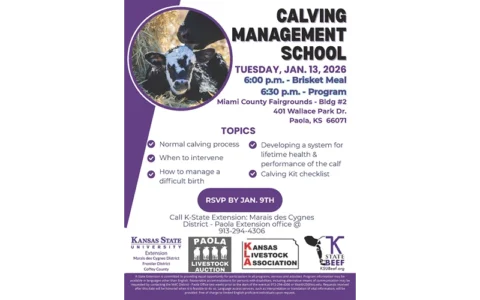
The Marais des Cygnes District, Frontier District, and Coffey County Extension offices will be hosting one of these Calving Schools on Tuesday, January 13, 2026. The program will be hosted at the Miami County Fairgrounds – Bldg. #2, 401 Wallace Park Drive, in Paola, Ks. Things will kick off with a sponsored brisket meal at 6:00 p.m. followed by presentations starting at 6:30 p.m. There is no cost to attend but interested persons are asked to pre-register by contacting the Marais des Cygnes District – Paola office (913)-294-4306 or emailing Katelyn Barthol at [email protected], by January 9th.
This program will outline overall calving management that includes stages of the normal calving process and tips to handle difficult calving situations. K-State Research and Extension beef veterinarian A.J. Tarpoff said the event will increase knowledge, practical skills and the number of live calves born. Dr. Tarpoff will demonstrate proper use of calving equipment on a life-size cow and calf model.
Dystocia, calving difficulty, is the result of the difference between calf size at birth (birth weight) and the dam’s birth canal (pelvic area). These two factors (birth weight and pelvic area), along with cow age, calf sex, gestation length, pre-calving nutrition and cow body condition, calf presentation, and maternal effects contribute to differences in calving difficulty. Of these factors, research has clearly demonstrated that calf birth weight is the primary factor. As calf birth weight increases, the percentage of cows requiring calving assistance also increases.
Genetic selection is the primary tool for effective management of birth weight and calving difficulty. Birth weight is a highly heritable trait, and responds to selection pressure. Tools such as Expected Progeny Difference (EPD’s) for birth and calving ease should be used in sire selection, especially, when breeding first calf heifers.
“Our goal is for producers to leave better prepared for calving season,” Tarpoff said. “We will discuss timelines on when to examine cows for calving problems, and when to call your vet for help if things are not going well. It’s an excellent program regardless of experience level.”
Door prizes, including calving supplies, will be awarded at the end of the program. Please mark your calendars and we hope to see you January 13th.